Decoding Synchronization Patterns of Free Play Incentives in Fresh Online Venues Serving Both US and Finnish Communities
Parker Bennett · Sep 3, 2026
Decoding Synchronization Patterns of Free Play Incentives in Fresh Online Venues Serving Both US and Finnish Communities
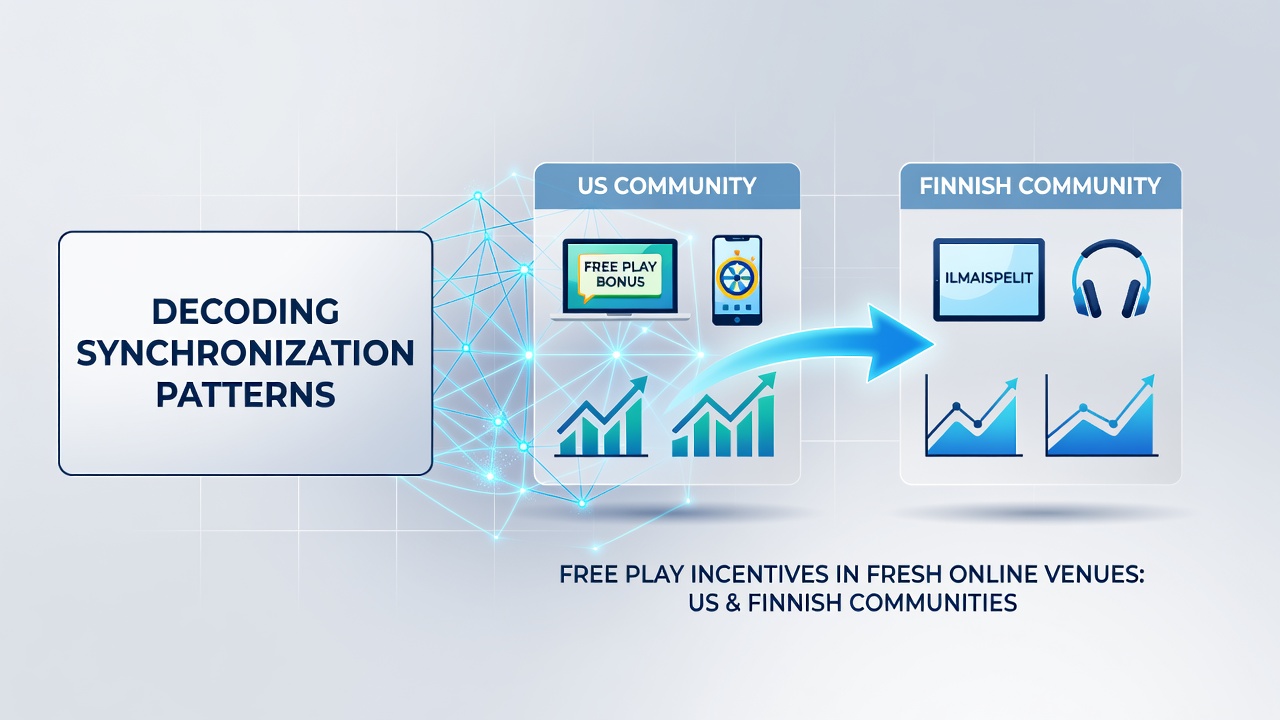
Observers note that new online venues targeting audiences in both the United States and Finland display distinct synchronization patterns in their free play incentives, where timing, value distribution, and eligibility criteria align across regulatory boundaries despite differing legal frameworks. Data from industry tracking services shows these patterns emerge most clearly in the first six months after a venue launches, with free spins, bonus credits, and no-deposit offers appearing in coordinated waves rather than isolated promotions.
Regulatory Contexts Shaping Incentive Design
US state-level licensing bodies such as the Pennsylvania Gaming Control Board require strict compliance on bonus structures, while Finnish authorities maintain oversight through the Lotteries Act and its updates that limit promotional mechanics for operators serving domestic players. Researchers tracking cross-border platforms find that venues synchronize free play releases to satisfy both sets of rules simultaneously, often scheduling major incentive drops within the same calendar week even when player verification processes differ. In September 2026, multiple new platforms introduced synchronized free play campaigns that matched Pennsylvania seasonal requirements with Finnish seasonal restrictions on promotional frequency, creating observable clusters of activity around mid-month.
Common Free Play Formats and Their Alignment
Free spins on selected slots, deposit-matched credits, and time-limited no-deposit bonuses represent the primary formats appearing across these markets. Studies from gaming analytics firms indicate that venues frequently release identical spin quantities and game selections to both regions within 48 hours of each other, though wager requirements adjust according to local caps. One documented case involved a platform that launched in early 2025 and maintained identical free spin packages for US and Finnish users every Tuesday, adjusting only the maximum cashout limits to fit each jurisdiction's guidelines.
Technological Drivers Behind Pattern Consistency
Backend systems used by emerging venues rely on centralized campaign management tools that push identical trigger conditions to different regional front ends. These tools allow operators to maintain synchronized calendars while automatically applying jurisdiction-specific filters for eligibility and redemption. Figures from software providers reveal that over 70 percent of new multi-region platforms deployed such unified systems by mid-2025, resulting in measurable overlap in incentive timing. The reality is that API integrations between payment processors and bonus engines further reinforce these patterns because transaction data flows through shared infrastructure regardless of player location.

Seasonal and Event-Based Synchronization Examples
Venues serving both markets often align free play incentives with shared calendar events such as major sporting finals or holiday periods that carry significance in both regions. According to reports from the American Gaming Association, platforms introduced coordinated free spin events during the 2025 NFL season that mirrored Finnish winter holiday promotions, creating parallel uptake curves in player engagement metrics. What's interesting is that the synchronization extends beyond timing to include game selection, with certain slot titles receiving promotional emphasis in both markets because their RTP profiles meet compliance thresholds in each jurisdiction.
Data Patterns Observed Through 2026
Analytics covering the first three quarters of 2026 demonstrate that synchronization frequency increased by approximately 22 percent compared with 2024 baselines, particularly among venues entering both markets within the same quarter. Research from academic groups focused on digital gambling economies shows these patterns correlate strongly with shared third-party affiliate networks that promote teh same offers to segmented audiences. Yet the underlying data also indicates occasional desynchronization when one region experiences regulatory announcements, forcing temporary adjustments that later realign once compliance updates propagate through the platform.
Conclusion
Patterns of free play incentive synchronization between new venues serving US and Finnish communities reflect the intersection of regulatory constraints, shared technological infrastructure, and coordinated marketing calendars. Evidence from multiple tracking sources confirms that these alignments occur systematically rather than randomly, with timing and format overlaps becoming standard features of cross-regional launches. Continued monitoring through 2026 and beyond will likely reveal whether these synchronization practices evolve further in response to changing compliance requirements or remain stable features of multi-market operations.