Navigating Seasonal Fluctuations in Prize Distribution Mechanisms Within Borderless Mobile Entertainment Networks
Uma Schmitz · Aug 25, 2026
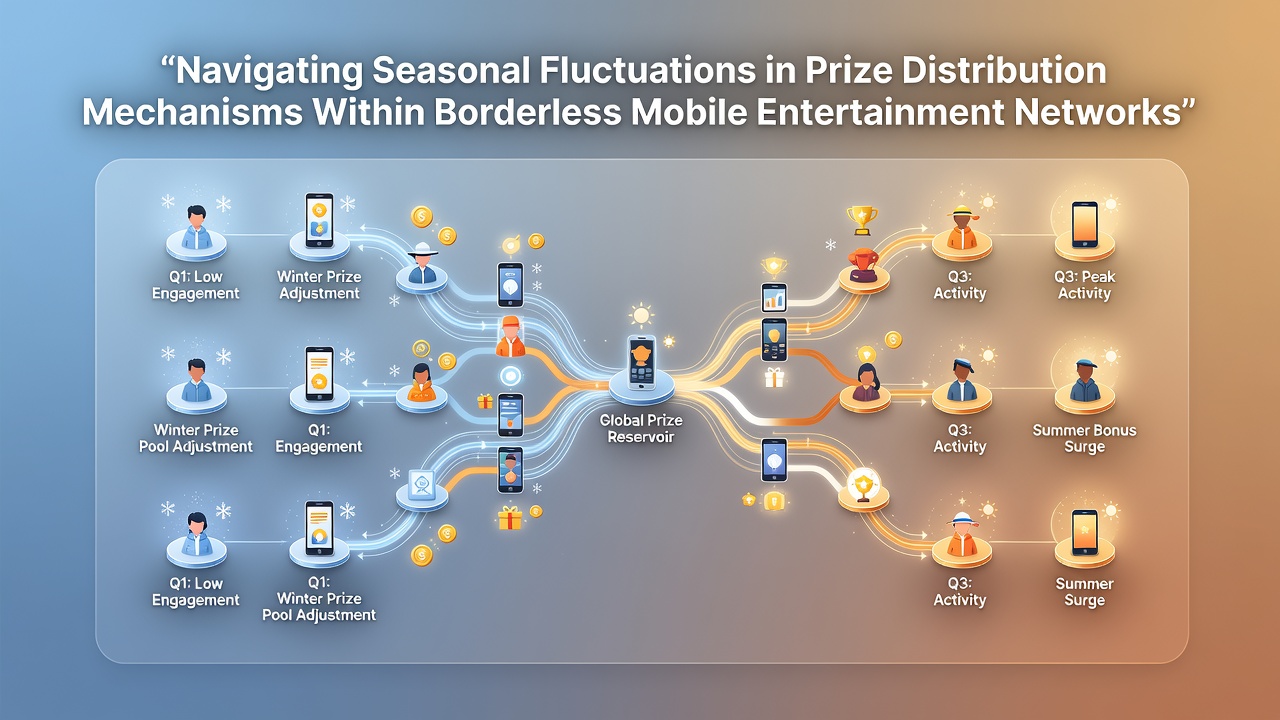
Navigating Seasonal Fluctuations in Prize Distribution Mechanisms Within Borderless Mobile Entertainment Networks
Borderless mobile entertainment networks operate across multiple continents and time zones, which means prize distribution mechanisms must adapt to recurring seasonal patterns that affect player participation and reward allocation. Data from network operators shows that prize pools expand during holiday periods in specific regions while contracting in others, and algorithms adjust automatically to balance supply across jurisdictions.
Understanding Core Mechanisms
Seasonal fluctuations arise because participation rates shift with cultural calendars, weather patterns, and local events, and network operators track these changes through real-time analytics that monitor login volumes and wager totals. Prize distribution systems rely on dynamic weighting formulas that incorporate historical participation data from the previous three years, and these formulas recalculate payout ratios at the start of each calendar quarter.
Operators in borderless environments divide player bases into geographic clusters based on regulatory requirements, and each cluster receives a proportional share of the overall prize pool that reflects local engagement levels. When one region experiences a surge during its summer months, the system reallocates portions from lower-activity clusters without altering individual prize values.
Regional Variations and August 2026 Trends
August 2026 recorded notable spikes in participation across Southern Hemisphere networks during winter holiday periods, while Northern Hemisphere activity dipped after major summer festivals concluded. Operators responded by increasing prize frequencies in active clusters and extending eligibility windows for users in slower regions to maintain overall engagement parity.
Research conducted by the International Center for Gaming Regulation at the University of Nevada documented these patterns through anonymized transaction logs from twenty-three mobile platforms, and the findings indicated that cross-border prize transfers occurred at rates 18 percent higher than in the same month of 2025. Adjustments involved temporary multiplier bonuses applied to base rewards in underperforming clusters.
Technical Adjustments and Compliance
Technical teams implement automated triggers that monitor deviation thresholds, and once participation in any cluster falls below 65 percent of its quarterly average, the distribution engine initiates rebalancing protocols. These protocols draw from reserve funds established specifically for seasonal smoothing, and reserve levels are replenished during peak periods through small percentage deductions from larger prize awards.

Regulatory frameworks in multiple jurisdictions require transparency reports that detail how seasonal adjustments affect prize equity, and operators submit these documents quarterly to bodies such as the Malta Gaming Authority and the Australian Communications and Media Authority. Compliance teams verify that no cluster receives disproportionate advantages through detailed audit trails that log every reallocation event.
Case Examples from Network Operations
One operator managing networks across Asia-Pacific and European markets adjusted its August 2026 prize calendar after data showed a 27 percent drop in European logins following regional events, and the system shifted additional prize tiers to active Asia-Pacific clusters while preserving minimum guarantee levels for European users. This approach kept total network payout percentages within target ranges of 94 to 96 percent.
Another platform serving North American and Latin American users applied time-zone-aware scheduling so that daily prize draws rotated through peak hours in each region, and seasonal multipliers compensated for lower winter participation in northern markets by increasing per-user reward probabilities. Figures released by the platform indicated stable retention rates across both hemispheres despite the shifts.
Future Monitoring Practices
Network administrators continue to refine predictive models that incorporate weather data, local event calendars, and macroeconomic indicators to anticipate fluctuation magnitudes, and machine learning layers update weighting coefficients monthly based on incoming performance metrics. These models help operators maintain consistent prize velocity even when external factors create unexpected participation swings.
Conclusion
Borderless mobile entertainment networks manage seasonal fluctuations through data-driven reallocation systems that respect regional regulatory constraints while preserving overall prize integrity, and ongoing refinements in August 2026 demonstrated continued improvement in cross-cluster balance. Observers note that transparent reporting and technical safeguards remain central to sustaining equitable distribution across expanding global user bases.